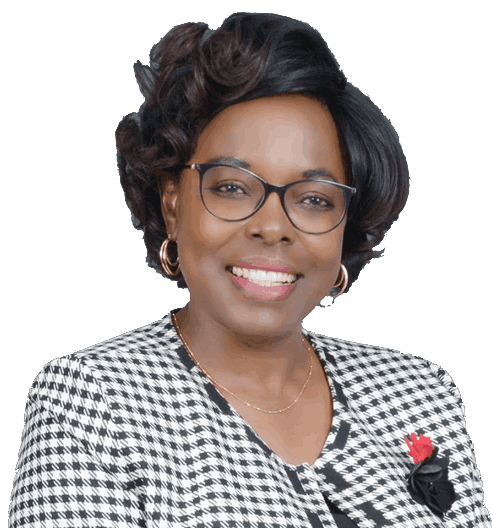

Stewardship
For Dr Margaret Nyakang’o, stewardship is not a ceremonial idea. It is the disciplined, daily work of guarding public resources, insisting on lawful expenditure, and keeping the management of public funds tied to accountability, transparency and the public good.Across her speeches, official briefings and reported interventions, one theme emerges with remarkable consistency: public money must never be treated casually. It must be planned for carefully, released lawfully, monitored closely and accounted for fully. That philosophy has come to define her public service as Controller of Budget.
Speaking during the 6th Public Finance Management Conference, Dr Nyakang’o framed stewardship as part of a wider responsibility to ensure that public finance works in the service of citizens. She emphasised that accountability is not a slogan, but a duty of answerability and ownership in the use of public resources.
“Accountants contribute to the responsible use of public funds.”Source: Office of the Controller of Budget press release
That same outlook has shaped her response to counties and public institutions that fail to observe proper financial controls. In reporting on expenditure outside approved processes, People Daily quoted Dr Nyakang’o warning that the misuse of revenue before lawful requisition is not just irregular, but dangerous to the integrity of public finance management.
“It is illegal and dangerous as far as the management of public funds is concerned.”Source: People Daily
Her stewardship has also extended to the growing burden of unpaid obligations in devolved government. Business Daily Africa reported that she pushed for county pending bills to be treated as public debt, arguing that leaving them outside the formal debt framework had allowed them to accumulate in ways that threaten prudent financial management and weaken fiscal discipline.
In another official presentation before the National Assembly Budget and Appropriations Committee, Dr Nyakang’o again returned to the fundamentals of stewardship: stricter controls, better planning, timely settlement of pending bills and stronger discipline in the use of public resources. She warned that unpaid obligations were becoming a serious risk to fiscal credibility and service delivery.
“a ticking time bomb”Source: Office of the Controller of Budget press release
What distinguishes Dr Nyakang’o’s approach is that stewardship, in her hands, is not only about preventing loss. It is also about protecting purpose. Public resources are meant to reach classrooms, health services, social protection programmes, development priorities and the broader obligations of the State. Where systems are weak, controls are bypassed or expenditure becomes unpredictable, stewardship requires intervention.
Seen in this light, her record is not simply one of financial supervision. It is one of institutional care — the patient but firm defence of order, prudence and credibility in the management of the public purse. For Dr Margaret Nyakang’o, stewardship means making sure that public finance remains both lawful in process and meaningful in impact.